


Description

Pipe Cleaning Balls are essential tools in pipeline maintenance. They serve multiple purposes across various industries. These lightweight, flexible devices clean, dewater, and separate products within pipelines. Their design allows them to navigate complex pipeline systems easily. Made from durable foam, they resist wear and tear. Additionally, operators can use ball foam pigs in pipelines of different diameters.
In pipeline cleaning, ball foam pigs remove debris and buildup. This ensures smooth fluid flow and prevents blockages. For dewatering, they efficiently expel water after hydrostatic testing. This process prepares the pipeline for product flow. Furthermore, ball foam pigs play a crucial role in product separation. They prevent cross-contamination between different product batches.
Operators also use ball foam pigs to prepare pipelines for inspection. These pigs clean the interior, ensuring accurate inspection results. They can also transport inspection tools through the pipeline. This versatility makes them invaluable for comprehensive pipeline assessments.
Moreover, ball foam pigs offer cost-effective solutions. They are reusable with proper maintenance. Their simple design requires minimal upkeep, saving time and resources. Additionally, ball foam pigs enhance safety. They clean without damaging the pipeline’s interior. Their efficiency reduces downtime, ensuring continuous operation. Ball foam pigs are indispensable in maintaining pipeline integrity and efficiency.
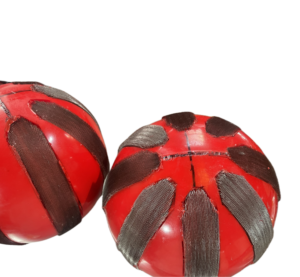
Specifications
| Bare Foam Pig | LCQZ-RTN | 1. Soft texture and good flexibility. | Starting pressure: 0.02 MPa |
| 2. With strong water absorption, the deformation amount can reach 60%. | Density: 35 kg/m³~220 kg/m³ | ||
| 3. Used for dewatering, cleaning, and drying pipelines. | Withstand pressure: 7 MPa | ||
| Stretch rate: 320% | |||
| Compression ratio: 60 | |||
| Flex life: 50,000 times | |||
| Attrition rate: 4 mm/100 km | |||
| Operating distance: 50 km~150 km | |||
| Operating temperature: -30℃~100℃ | |||
| Polly Foam Pig | LCQZ-RTR | 1. Polyurethane material foams its interior. A polyurethane elastomer coating covers the surface. | Starting pressure: 0.02 MPa |
| 2. Good flexibility and certain wear resistance. | Density: 35 kg/m³~220 kg/m³ | ||
| 3. The deformation amount can reach 50%. Which is the most widely used foam pig. | Withstand pressure: 7 MPa | ||
| 4. Used for scrubbing, descaling, and fluid isolation of pipes. | Stretch rate: 320% | ||
| Compression ratio: 50 | |||
| Flex life: 50,000 times | |||
| Attrition rate: 2 mm/100 km | |||
| Operating distance: 100 km~300 km |
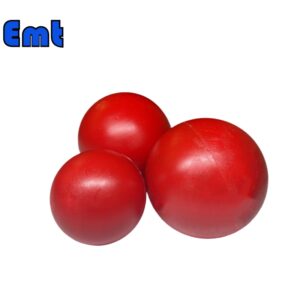
Applications of Pipe Cleaning Balls
Ball foam pigs have diverse applications in pipeline maintenance. They play a crucial role in cleaning pipelines. These pigs remove debris and buildup, ensuring smooth fluid flow. This cleaning prevents blockages and maintains pipeline efficiency.
In dewatering applications, ball foam pigs are essential. They expel water after hydrostatic testing. This process prepares pipelines for product flow. Additionally, they remove residual moisture, preventing corrosion and maintaining product quality.
Ball foam pigs also excel in product separation. They separate different batches in multi-product pipelines. This separation prevents cross-contamination between products. Moreover, pigs purge pipelines between product changes, ensuring purity.
Operators use ball foam pigs for inspection preparation. They clean the pipeline interior before inspections. This cleaning ensures accurate and reliable inspection results. Additionally, they transport inspection tools through the pipeline.
Ball foam pigs are versatile in pipeline maintenance. They navigate bends and varying pipeline diameters. Their flexible design adapts to different pipeline conditions. This adaptability makes them suitable for complex systems.
Cost-effectiveness is another advantage. Ball foam pigs are reusable with proper maintenance. Their simple design requires minimal upkeep. This reduces operational costs and saves resources.
Polyurethane Test Report
| Polyurethane Test Report | ||||
| NO. | TEST PROJECT | UNIT | TEST REPORT | TEST METHOD |
| 1 | Shore hardness | Shore A | 83 | GB/T 531.1-2008 |
| 2 | DIN abrasion | mm3 | 21 | GB/T 53516-1987 |
| 3 | Akron abrasion | cm3 | 0.0518 | GB/T 1689-1998 |
| 4 | 100% stress at definite elongation | MPa | 3.41 | GB/T 528-2009 |
| 5 | 300% stress at definite elongation | MPa | 5.74 | GB/T 528-2009 |
| 6 | Tensile strength | MPa | 51.2 | GB/T 528-2009 |
| 7 | Elongation at break | % | 1263 | GB/T 528-2009 |
| 8 | Tear strength(right angle) | kN/m | 77 | GB/T 529-2008 |
| 9 | Resilience rate | % | 34 | GB/T 1681-2009 |
Reviews
There are no reviews yet.