
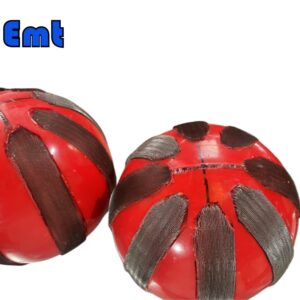
 Pigging Ball With Brushes
Description
What Is Pigging?
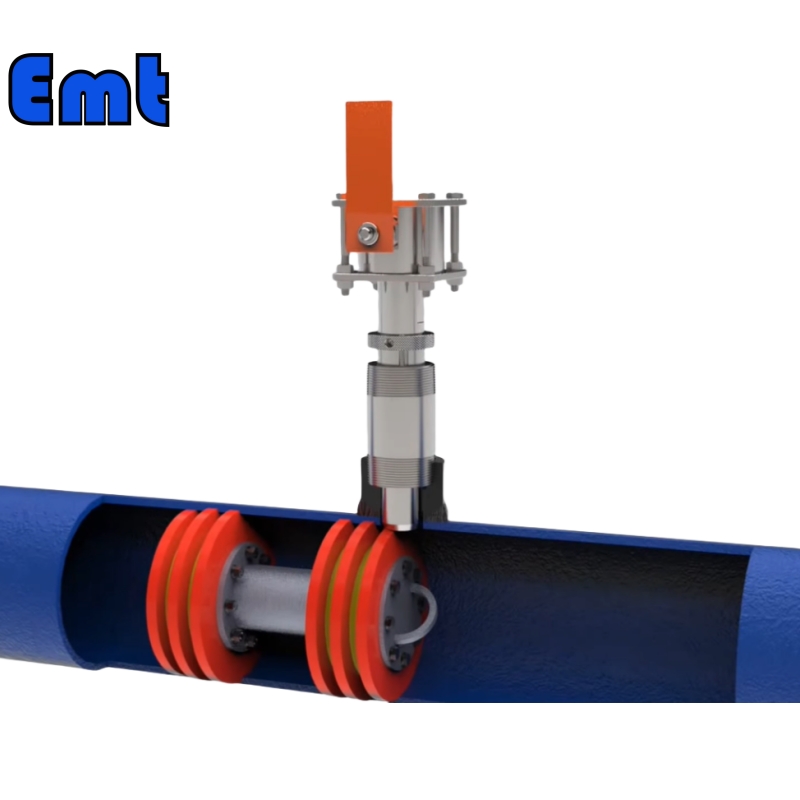
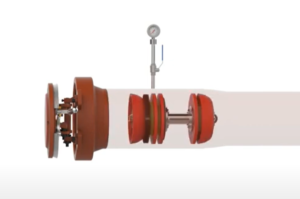
Pigging is a process used in pipelines to clean, inspect, or maintain them by inserting a device called a “pig”. The pig travels through the pipeline, removing debris, inspecting for defects, or improving flow efficiency. This technique is commonly working in industries such as oil and gas, food production, and water treatment.
Pigging for pipeline is a crucial maintenance technique working in industries such as oil and gas, chemical processing, and food production to clean, inspect, and optimize pipeline efficiency. This process involves inserting a specialized device called a pig into the pipeline, which moves through the system to remove debris, detect corrosion, and ensure smooth product flow. Various types of pigs, including cleaning pigs, intelligent pigs, and batching pigs, help maintain pipeline integrity, reduce downtime, and prevent contamination. By implementing pigging for pipeline operations, companies can enhance safety, comply with industry regulations, and extend the lifespan of their infrastructure while minimizing operational costs.
Pigging For Pipeline Importance
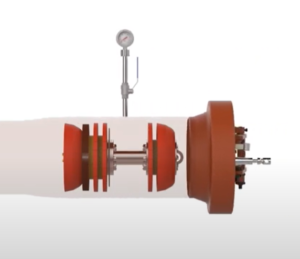
Pigging for pipeline maintenance is essential for ensuring efficient and safe operations by addressing various challenges associated with pipeline transportation. It helps maintain pipeline efficiency by removing buildup, preventing blockages, and ensuring the smooth flow of materials. Additionally, it prevents corrosion and damage by eliminating moisture and contaminants that could lead to internal deterioration over time. This proactive maintenance approach also reduces operational costs, as it minimizes the need for costly repairs and prevents unexpected downtime by preserving pipeline integrity.
Moreover, pigging enhances safety by preventing leaks and failures that could result in environmental hazards or operational disruptions. Furthermore, it supports inspection and monitoring, as smart pigs equipped with advanced sensors can detect cracks, deformations, and corrosion, allowing for early detection of potential issues. By integrating pigging into regular maintenance routines, industries can significantly improve pipeline performance, longevity, and overall reliability.
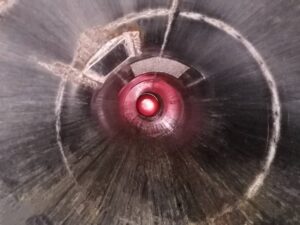
Which Type of Pipes Need to be Cleaned?
Oil and Gas Pipelines: To remove wax, scale, and hydrate buildup.
Water and Sewer Pipelines: To prevent clogs and bacterial growth.
Chemical and Industrial Pipelines: To avoid contamination between different batches of chemicals.
_032003200_4429.jpg)
Reviews
There are no reviews yet.