
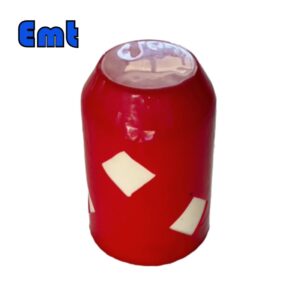
 Polly Pig
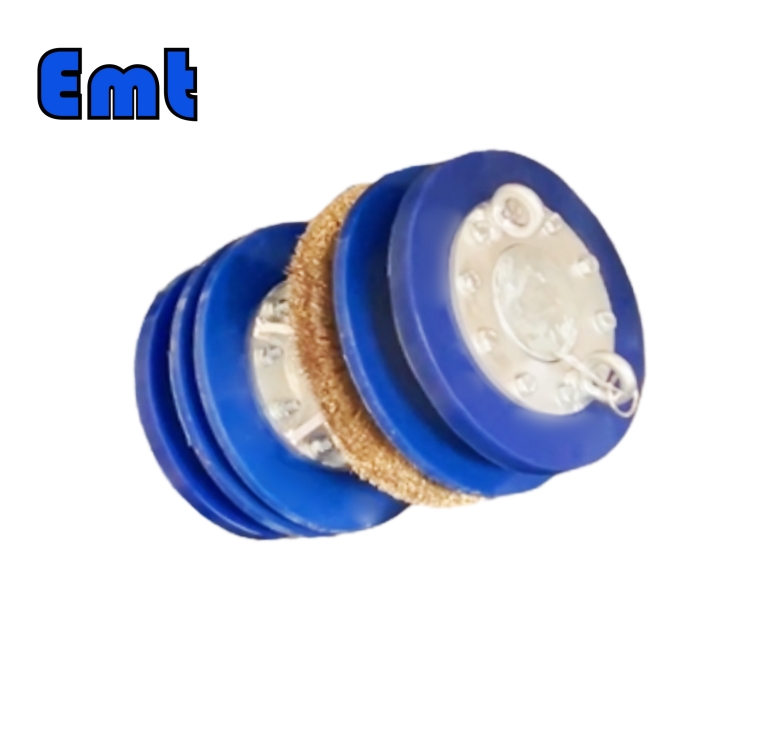
Description
As a manufacturer of pipe cleaning pigs, we provide many kinds and sizes of pigs. Quality first is our moral. For thirty years we have been devoted to providing the highest quality of products for our customers. We have professional engineers and technicians to ensure that our products are of the highest quality, the most durable, and the most practical. Our pigs are all made of top-quality materials, and the quality control department strictly tests each product to ensure that it meets the customer’s requirements.
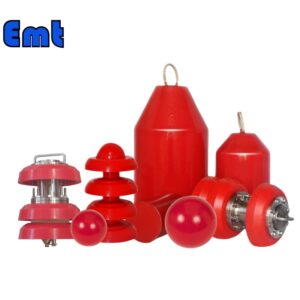
Pig Pipeline Cleaning Types
Foam Pigs
Foam pigs are the cheapest types of cleaning pigs. They are made of polyurethane foam. Some of them have a Polly cover. In contrast, some of them are just bare foam pigs. Bare foam pigs are good at dewatering. Polly pigs behave better in cleaning. If you want both a good dewatering effect and a cleaning effect, criss-cross foam pig is a good choice. This kind of pig has a Polly cover over the bare foam pig. But the cover is cut to some criss-cross shapes. So the cut cover parts will dewater and the rest will achieve the cleaning effect. Because of the two advantages, these kinds of pigs are always a little more expensive than both bare foam pigs and Polly foam pigs.
Mechanical Pigs
Mechanical Pigs generally have two types, Mechanical pigs with cups and mechanical pigs with discs. Cup pigs have better-sealing properties with the pipe. On the contrary, disc pigs do not have a sealing property like cup pigs, but they have better supportability. At present, both cup pigs and disc pigs are widely used in various circumstances, and each has its own unique advantages. When choosing mechanical pigs, users should consider the characteristics and applications of different types and select the most suitable pig according to their actual needs.
Solid Cast Pigs
Solid cast pigs offer robust and reliable solutions for pipeline maintenance. Their three-cup design ensures a smooth transition with a full wall seal through tees, check valves, and full opening valves. This design enhances their versatility and effectiveness in various pipeline configurations. The hollow core of these pigs allows for expansion under pressure, ensuring maximum performance at all times.
Solid cast cleaning pigs excel in controlling paraffin build-up in crude oil lines, making them indispensable for crude oil transport. They also effectively separate refined products, support pipeline commissioning, and facilitate product evacuation. Their durability and efficiency make them a preferred choice for maintaining pipeline integrity and ensuring optimal flow.
Polyurethane Pigs
Polyurethane pigs are versatile and durable tools used for pipeline cleaning and maintenance. Made from high-quality polyurethane, these pigs offer exceptional flexibility and strength, allowing them to navigate through various pipeline configurations with ease. Their robust construction ensures they can withstand harsh conditions and abrasive materials, making them suitable for a wide range of applications.
The design of polyurethane pigs often includes multiple cleaning elements, such as cups, discs, or brushes, which provide efficient debris removal and effective cleaning. These pigs can handle tasks such as removing deposits, displacing liquids, and separating different products within the pipeline. Their ability to expand and conform to pipeline walls under pressure ensures a tight seal and thorough cleaning.
Polyurethane pigs are commonly used in industries such as oil and gas, water treatment, and chemical processing. They help maintain pipeline integrity by preventing blockages and reducing wear and tear. Additionally, their long service life and reusability contribute to cost-effective pipeline maintenance.
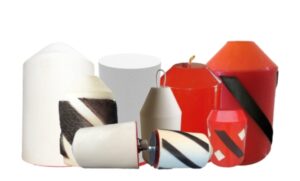
Polyurethane Test Report
| Polyurethane Test Report | ||||
| NO. | TEST PROJECT | UNIT | TEST REPORT | TEST METHOD |
| 1 | Shore hardness | Shore A | 83 | GB/T 531.1-2008 |
| 2 | DIN abrasion | mm3 | 21 | GB/T 53516-1987 |
| 3 | Akron abrasion | cm3 | 0.0518 | GB/T 1689-1998 |
| 4 | 100% stress at definite elongation | MPa | 3.41 | GB/T 528-2009 |
| 5 | 300% stress at definite elongation | MPa | 5.74 | GB/T 528-2009 |
| 6 | Tensile strength | MPa | 51.2 | GB/T 528-2009 |
| 7 | Elongation at break | % | 1263 | GB/T 528-2009 |
| 8 | Tear strength(right angle) | kN/m | 77 | GB/T 529-2008 |
| 9 | Resilience rate | % | 34 | GB/T 1681-2009 |
Parameters
| Name | Oil Pipe Pig |
| Material | 1. steel framework main body. |
| 2. The disc material used to be Polyurethane, Viton, Neoprene, Nitrile butadiene etc. | |
| 3. The cup material used to be Polyurethane, Viton, Neoprene, Nitrile butadiene etc. | |
| 4. Steel brush or nylon brush. | |
| Feature | 1. Firstly, good wearing resistance. |
| 2. Secondly, strong passing ability. | |
| 3. Nice cleaning performance. | |
| 4. Then accurate location and tracking. | |
| 5. At last, a low rate of false positives. | |
| Packing way | packed pipe cleaning pigs with inner plastic film and outer plywood wooden case. |
| Payment | TT/LC |
| Advantage | 1. Firstly, good sealing performance. |
| 2. Secondly, high wear resistance. |
| Bare Foam Pig | LCQZ-RTN | 1. Soft texture and good flexibility. | Starting pressure: 0.02 MPa |
| 2. With strong water absorption, the deformation amount can reach 60%. | Density: 35 kg/m³~220 kg/m³ | ||
| 3. Used for dewatering, cleaning, and drying pipelines. | Withstand pressure: 7 MPa | ||
| Stretch rate: 320% | |||
| Compression ratio: 60 | |||
| Flex life: 50,000 times | |||
| Attrition rate: 4 mm/100 km | |||
| Operating distance: 50 km~150 km | |||
| Operating temperature: -30℃~100℃ | |||
| Polly Foam Pig | LCQZ-RTR | 1. Its interior is foamed by polyurethane material. The surface is coated with a polyurethane elastomer coating. | Starting pressure: 0.02 MPa |
| 2. Good flexibility and certain wear resistance. | Density: 35 kg/m³~220 kg/m³ | ||
| 3. The deformation amount can reach 50%. Which is the most widely used foam pig. | Withstand pressure: 7 MPa | ||
| 4. Used for scrubbing, descaling, and fluid isolation of pipes. | Stretch rate: 320% | ||
| Compression ratio: 50 | |||
| Flex life: 50,000 times | |||
| Attrition rate: 2 mm/100 km | |||
| Operating distance: 100 km~300 km |
_032003200_4429.jpg)
Reviews
There are no reviews yet.