

Description

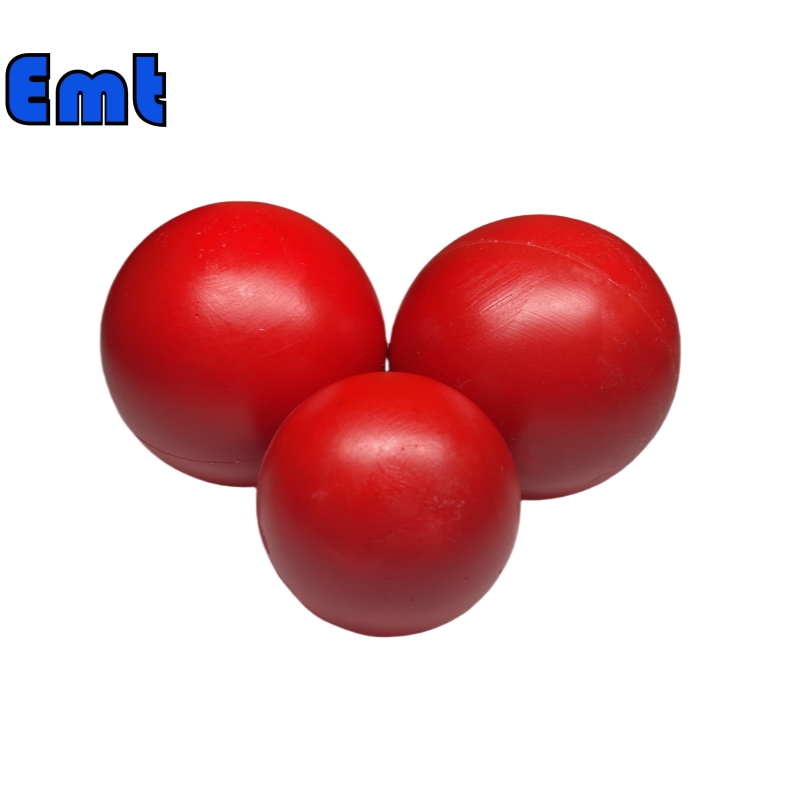
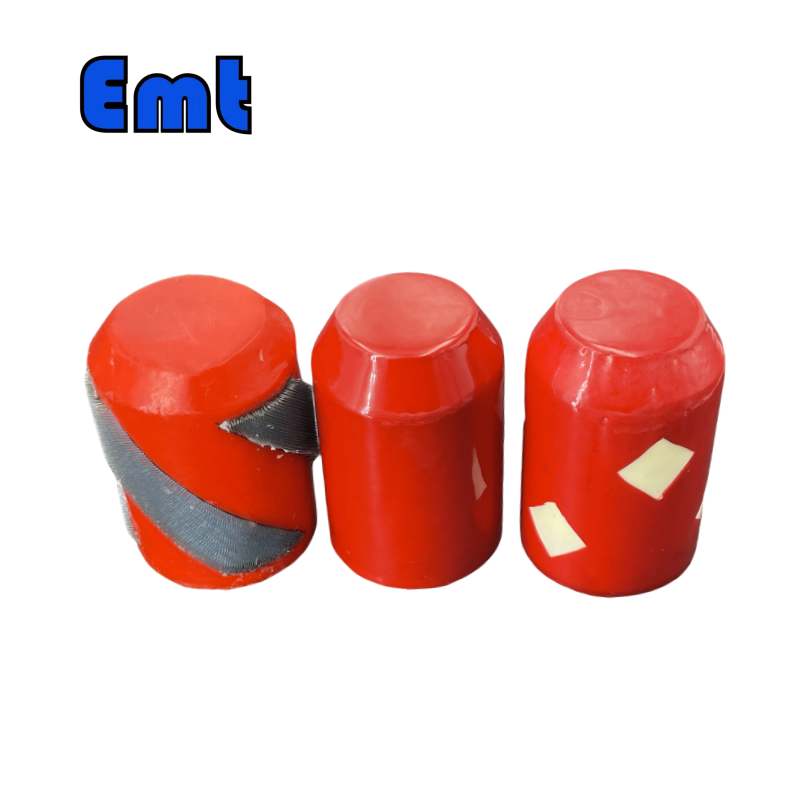
EMT Urethane Spheres Pigs consist of corrosion-resistant neoprene rubber. There are two kinds of hollow ball and solid ball. The pig ball with DN > 100mm is hollow. Urethane spheres Pigs work when the pipe diameter is less than 100mm. The wall thickness of the hollow ball is one-tenth of the inner diameter of the gas transmission pipe. The hollow ball is equipped with an air nozzle, and the hollow ball is filled with water. In winter, the ball should cover an antifreeze solution (such as ethylene glycol) to prevent freezing. When the pig ball is running in the pipeline, it needs to have a certain sealing property. Therefore the outside diameter of the ball needs to be greater than the inside diameter of the transmission pipe. We also offer brushes to add to the pigs. So that they can have a better cleaning effect.
Specifications of EMT Urethane Spheres Pigs
| Polly Foam Pig | LCQZ | 1. Polyurethane material foams its interior. A polyurethane elastomer coating covers the surface. | Starting pressure: 0.02 MPa |
| 2. Good flexibility and certain wear resistance. | Density: 35 kg/m³~220 kg/m³ | ||
| 3. The deformation amount can reach 50%. | Withstand pressure: 7 MPa | ||
| 4. Used for scrubbing, descaling, and fluid isolation of pipes. | Stretch rate: 320% | ||
| Compression ratio: 50 | |||
| Flex life: 50,000 times | |||
| Attrition rate: 2 mm/100 km | |||
| Operating distance: 100 km~300 km |
The difference between the outer diameter of the ball and the inner diameter of the tube is the interference amount. The interference amount is 2% of the inner diameter of the tube when the ball is not full of water. The interference amount is 3%-5% when it is full of water. So that the ball can cling to the tube wall without air leakage and liquid leakage. The main purpose of the Urethane Spheres Pigs is to remove the accumulated liquid in the pipe and the separating medium. However, the effect of removing blocky objects is poor. It cannot carry detection instruments directionally, nor can it be used as a traction tool for them.
Advantages and Disadvantages
Advantages:
First, large torque. Second, oil resistance, acid, and alkali resistance, aging resistance, high-temperature resistance, long service life, and so on. These advantages bring great convenience and benefit to the design, construction, production, and maintenance of pipeline engineering.
Disadvantages:
Remove wax and rust in the tube, etc., and it isn’t easy to install test instruments on the sphere.
More Introduction
The Urethane Spheres Pig is a special device made of corrosion-resistant neoprene material. It is divided into two types: hollow ball and solid ball. For gas pipelines with a diameter greater than 100mm, hollow balls are usually used, while solid balls are suitable for pipe diameters less than 100mm. The wall thickness of the hollow ball is designed to be one-tenth of the inner diameter of the transmission pipe, and the internal air nozzle is usually used to fill water. In winter, it may be necessary to fill the water solution with antifreeze such as ethylene glycol to prevent the ball from freezing at low temperatures.
The operation of the pig ball in the pipeline needs to ensure good sealing, so its outside diameter is required to be greater than the inside diameter of the pipeline. The size difference between the two is called the interference amount, which is 2% of the inner diameter of the pipe when it is not filled with water, and 3% to 5% after it is filled with water, ensuring that the sphere can be tightly fitted to the pipe wall to prevent gas or liquid leakage.
The main function of the pigging ball is to remove the fluid in the tube and separate different media, but the effect of removing large objects is not ideal. In addition, it does not have the ability to carry testing instruments, nor can it be used as a traction tool. Therefore, pigging balls play an important role in pipeline cleaning and media isolation operations, but their design and use need to be adjusted to specific pipeline conditions and needs.
Test Report & Polyurethane Material Specification
| Polyurethane material specification: | ||
| NO. | Factory inspection main indicators | Cup/DISC |
| 1 | 20℃Hardness(SHORE A) | 85±2 |
| 2 | Tensile strength (MPa) | 51.7 |
| 3 | 100%stress at definite elongation (MPa) | 4.8 |
| 4 | 300%stress at definite elongation (MPa) | 9.2 |
| 5 | Tensile set (%) | 780 |
| 6 | Tear strength (KN/m) | 73 |
| 7 | Impact resilience (%) | 32 |
| 8 | DIN abrasion (mm²) | 35 |
| Polyurethane Test Report | ||||
| NO. | TEST PROJECT | UNIT | TEST REPORT | TEST METHOD |
| 1 | Shore hardness | Shore A | 83 | GB/T 531.1-2008 |
| 2 | DIN abrasion | mm3 | 21 | GB/T 53516-1987 |
| 3 | Akron abrasion | cm3 | 0.0518 | GB/T 1689-1998 |
| 4 | 100% stress at definite elongation | MPa | 3.41 | GB/T 528-2009 |
| 5 | 300% stress at definite elongation | MPa | 5.74 | GB/T 528-2009 |
| 6 | Tensile strength | MPa | 51.2 | GB/T 528-2009 |
| 7 | Elongation at break | % | 1263 | GB/T 528-2009 |
| 8 | Tear strength(right angle) | kN/m | 77 | GB/T 529-2008 |
| 9 | Resilience rate | % | 34 | GB/T 1681-2009 |
Reviews
There are no reviews yet.