


Description

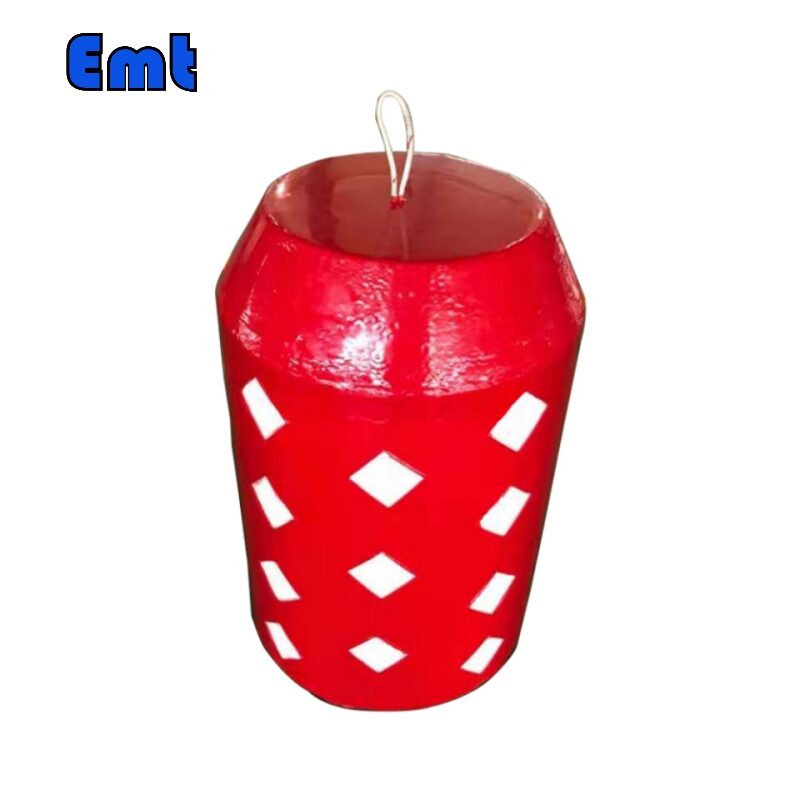
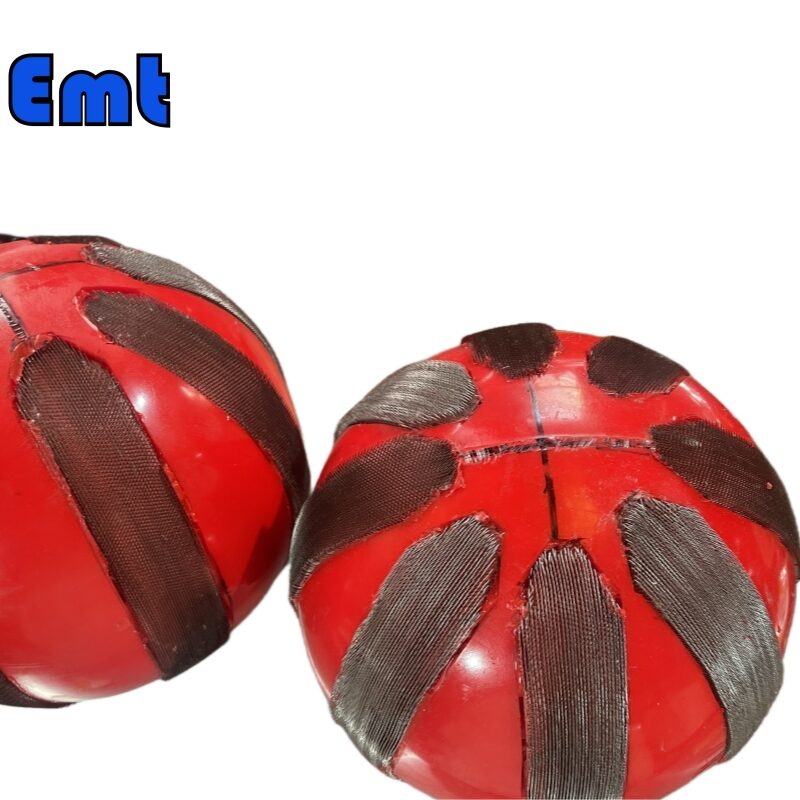
EMT Fluororubber Pigs
Fluorine rubber is a kind of special rubber with excellent oil resistance, high temperature resistance, and chemical corrosion resistance, which is widely used in aviation, aerospace, automotive, petrochemical, and other fields. EMT Fluororubber Pigs use this kind of material making it a better choice to clean the pipe.
Fluororubber Producing Process
Raw Material Preparation
1. Fluorine raw rubber: Choose fluorine rubber rubber with high fluorine content to ensure the performance of fluorine rubber.
2. Curing agent: The commonly used curing agent is bisphenol AF, bisphenol S and so on.
3. Accelerators: substances that promote the vulcanization reaction, such as dimethylaniline.
4. Filler: improve the physical properties of fluorine rubber, such as carbon black, white carbon black, etc.
5. Antioxidant: improve the heat resistance of fluorine rubber, such as phenyl benzimidazole and so on.
Compound
1. The fluorine rubber raw rubber, vulcanization agent, accelerator, filler, antioxidant, and other raw materials are added to the mixer according to a certain proportion.
2. Mixing at a certain temperature makes the raw materials fully mixed and uniform.
3. Pay attention to controlling the temperature and time during the mixing process to avoid overheating or overmixing.
4. After mixing, place the compound on the open rubber mixing machine for a thin opening to further uniform the compound.
Vulcanization Process
1. Cut the mixed fluorine rubber compound into a film of a certain shape and size.
2. Put the film into the mold and vulcanize it at a certain temperature and pressure.
3. During the vulcanization process, attention should be paid to controlling temperature, pressure, and time to ensure the degree of vulcanization and physical properties of fluororubber.
4. After vulcanization, take out the vulcanized fluororubber products for post-treatment, such as deburring, cleaning, etc.

Specifications
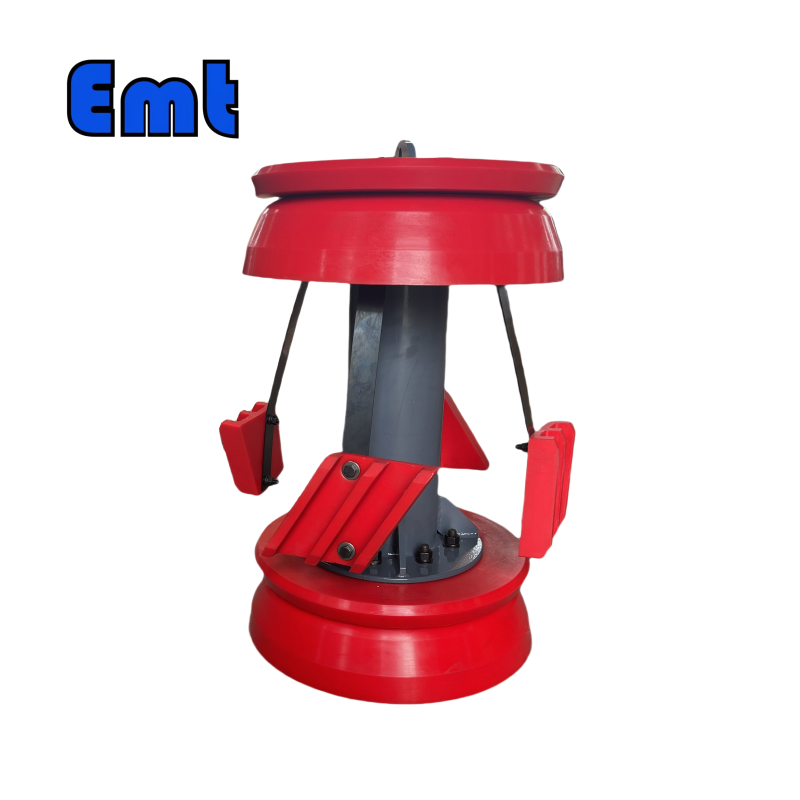
| Name | Oil Pipe Pig |
| Material | 1. steel framework main body. |
| 2. The disc material used to be Polyurethane, Viton, Neoprene, Nitrile butadiene etc. | |
| 3. The cup material used to be Polyurethane, Viton, Neoprene, Nitrile butadiene etc. | |
| 4. Steel brush or nylon brush. | |
| Features | 1. Firstly, good wearing resistance. |
| 2. Secondly, strong passing ability. | |
| 3. Nice cleaning performance. | |
| 4. Then accurate location and tracking. | |
| 5. At last, a low rate of false positives. | |
| Packing way | packed pipe cleaning pigs with inner plastic film and outer plywood wooden case. |
| Payment | TT/LC |
| Advantages | 1. Firstly, good sealing performance. |
| 2. Secondly, high wear resistance. |
Features of EMT Fluororubber Pigs
EMT Fluororubber Pigs have a high degree of chemical stability and are the best medium resistance of all elastomers at present.
Moreover, EMT Fluororubber Pigs have a high degree of chemical stability and are the best medium resistance among all elastomers at present. In addition, fluorine rubber has excellent weather aging resistance and ozone resistance. Fluorine rubber has excellent physical and mechanical properties.
EMT Fluororubber Pig is highly stable in extremely high temperatures and harsh environments, such as strong acids and alkalis. Besides, the pig is nearly unaffected by chemicals, making it ideal for corrosion-resistant seals. It performs well in temperatures from -40℃ to 200℃. Its sealing rings effectively prevent gas, liquid, and steam leaks, offering high wear resistance for use in high-speed and frequently moving mechanical equipment. Additionally, it resists oxidation and radiation, preventing aging and deterioration. However, fluorine rubber is more expensive than other materials, involves a complex production process requiring advanced technology, and has poor elasticity and toughness in low temperatures, making it unsuitable for such environments.

Main Difference Between Fluororubber And Nitrile Butadiene Rubber
The main difference between fluororubbers and nitrile butadiene rubber lies in their chemical structure, properties and application fields. Fluorine rubber is a kind of high-performance special rubber, mainly composed of carbon and fluorine atoms, with excellent high temperature resistance, chemical corrosion resistance and oil resistance. With a wide range of operating temperatures, from -20 ° C to +250 ° C, fluorine rubber can withstand a variety of chemical attacks and is suitable for high temperature, high pressure, acid and alkaline liquids or applications requiring more stringent sealing performance. The disadvantages of fluororubbers include difficult processing performance, high price, poor cold resistance and water resistance.
In contrast, nitrile butadiene rubber is a copolymerization of butadiene and acrylonitrile, which has excellent oil and wear resistance, good heat resistance and adhesion. Nitrile rubber is suitable for a temperature range of -35 ° C to 120 ° C and is suitable for general industrial applications and lubricating oil seals. Although nitrile rubber has a strong resistance to oils at room temperature, its performance may be affected in high temperature and reinforcement environments.
Fluorine rubber with its excellent resistance to high temperature, chemical corrosion and oil resistance, suitable for high temperature, high pressure, acid and alkaline liquids or applications requiring more stringent sealing performance. Nitrile rubber, with its excellent oil and wear resistance, is suitable for general industrial applications and lubricating oil seals, especially under common operating conditions. The choice of material depends on the specific application requirements and operating conditions.
Reviews
There are no reviews yet.