

Description
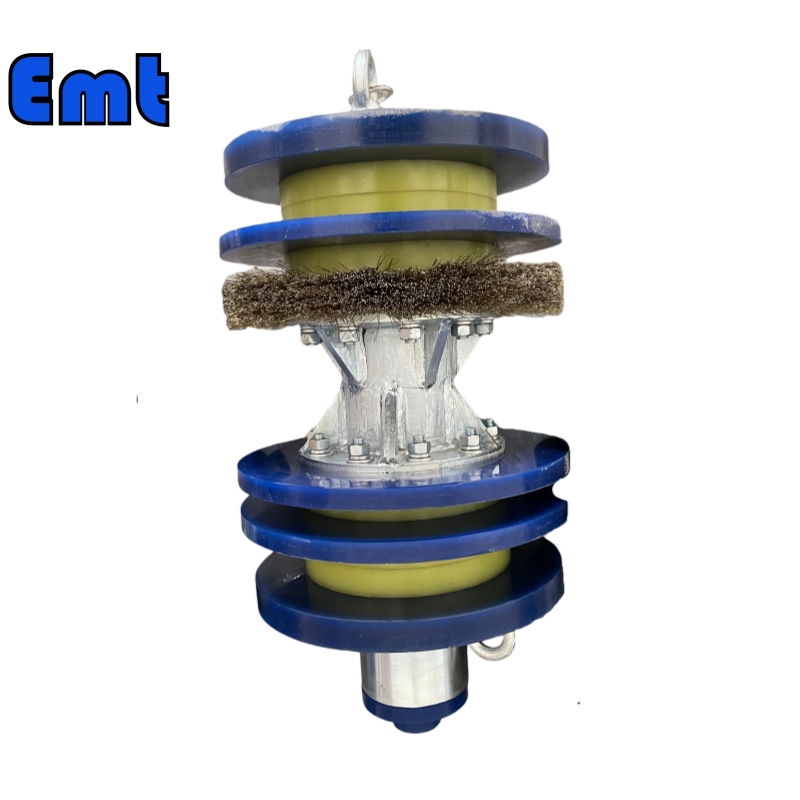
A pig tracker consists of two parts: an electronic transmitter mounted on a pig and an electronic receiver operating on the ground. The EMT Blue Disc Cleaning Pig in the picture has an electronic transmitter. The Disc Cleaning Pig With An Electronic Transmitter runs in the pipeline and sends out electromagnetic signals without interruption regularly. The signals transmit through the tube wall and the cover soil layer. The transmitted electromagnetic signals are received by the receiver probe and sent out signals after processing by the receiver. Through the signal transmission between the transmitter and the receiver, the operation state of the pipeline pig can be timely. Besides, the position of the pig in the pipeline can be accurately determined when the pig is stuck.
Pig Tracking System
A pig tracker is an intelligent pipe composition device.
The intelligent pig tracking system consists of an electronic transmitter, an electronic receiver, an electronic through indicator, and a pipeline through the indicator.
Electronic transmitter: including the host (LC oscillator, pulse signal generator composed of modulator), battery (high-energy lithium battery, non-rechargeable. Other batteries are also customizable). Install on the pig and run with the pig. Electronic receivers include a host, a probe, and a monitoring headset. Portable mobile devices working on the ground, workers carry detection transmitter signals. Electronic through indicator: including 1 host, and 2 probes. It is a portable mobile device that sits in a landmark position on the ground.
A pipeline through the indicator: including the head, and sensor. It is a fixed device, that is installed and assembled with the pipeline in the position of the ball cylinder, the ball receiving cylinder, and the fixed monitoring point. It is connected with the clamp type and has the function of external power supply and remote transmission.
Main Specifications
| Electronic Transmitter | |
| Continuous working time | 20~150 hours (long standby 360 hours) |
| Allowable medium temperature | -20~+65℃ |
| Medium pressure | 2.5~10MPA |
| Impact resistance | 7g |
| Power supply voltage | DC3-15V(high energy lithium-ion battery or dry battery, non-rechargeable) |
| Electronic Receiver | |
| Continuous working time | 100 hours |
| Receiving distance (air) | ≧18m (long distance 60m) |
| Effective detection distance | ≧5m (long distance 20 meters) |
| Positioning accuracy | ≦0.3m |
| Power supply voltage | DC6V(5# dry battery 4) |
Note:
1. It is customizable not less than 26 mm in diameter, length not less than 81 mm in any size transmitter.
2. It is customizable with flanges, without flanges, removable flanges, etc.
3. We configure the transmitter battery according to the requirements of ordinary dry batteries, rechargeable batteries, lithium batteries, etc.
4. It can be equipped with a battery pack, and can also be installed with a single battery.
Tracking Device Working Principle
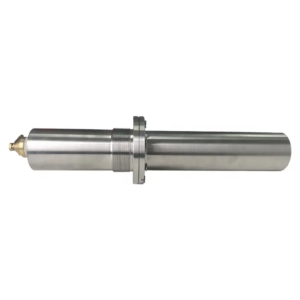
The transmitting source of the transmitter transmits the alternating electromagnetic signal through the inductor coil and transmits the energy to the ground space using the strong penetration ability of ultra-low frequency electromagnetic waves. The receiver receives the emitted electromagnetic wave signal through the probe to complete the tracking.
How To Use The Electronic Transmitter
1. The specific operation steps for using the transmitter are as follows:
1) Open the back cover with a special wrench (rotate counterclockwise).
2) Plug the two parts of the switch together, and pay attention to the direction of the self-locking device, the wrong electrode connection will cause damage to the equipment.
3) Use the receiver to receive the signal experiment, if the receiver receives the signal normally, then carry the next step.
4) Check whether the sealing ring of the end cap is intact. If there is damage, it is necessary to replace the sealing ring.
5) Tighten the back cover (rotate clockwise) and connect the transmitter to the pig (the transmitter below Φ325 is in the pig skeleton body. We recommend you use a stainless steel skeleton to reduce signal shielding).
6) The receiver is then used for the receiving signal experiment. If the receiver receives the signal normally, the pig can be placed in the service cylinder and pushed to the reducer to start the pipeline cleaning work.
7) After the completion of the pigging task, open the back cover and pull out the plug, that is, disconnect the power supply.
Battery Replacement Method
The electronic transmitter is powered by a disposable high-energy lithium battery. It is also necessary to check whether a new battery needs to be replaced before each pigging. To ensure continuous working hours. We provide special batteries. When you don’t use the battery for a long time, you should take it out and store it in a cool and dry place.
To replace the battery, perform the following steps:
1) Open the back cover with a special wrench (rotate counterclockwise);
2) Unplug the plug;
3) Unscrew two press screws and take out the battery press;
4) Take out the old battery (pull it out);
5) Put in the new battery and tighten the battery press screw;
6) Connect the plug switch (pay attention to the polarity and direction, the wrong electrode will damage the transmitter), and use the receiver to detect the signal is normal;
7) After checking the seal ring is intact, tighten the back cover;
8) The receiver is then used for the receiving signal experiment. If the receiver receives the signal normally, you can put the pig into the pipeline to clean the pig line.
9) After the pigging is over, open the back cover and unplug the switch, that is, disconnect the power supply.
10) At the same time provide a single battery installation mode, press the battery, screw on the end cover can be used.
Storage method:
Keep away from fire, high temperature, and strong magnetic field, and store in a dry and ventilated place.
WHAT IS PIPELINE CLEANING?
Pipeline cleaning refers to the cleaning of the pipeline to restore the surface of the material itself in the pipeline. After cleaning, a dense chemical passivation film forms on the clean metal surface. It can effectively prevent the recurrence of dirt, and can effectively protect the equipment. So that the equipment does not corrode or other chemical damage. This can effectively ensure the safety of the equipment and extend the service life of the equipment.
Reasons
Significance
Method
2. high-pressure water cleaning: the high-pressure water jet above 50Mpa works in peeling and cleaning the dirt on the inner surface of the pipeline. The main technology is for short-distance pipelines, and the pipe diameter must be greater than 50cm. This technology has the characteristics of high speed and low cost.
3. PIG pigging: PIG industrial pigging technology relies on the driving force generated by the pump to push the fluid to drive the PIG (pig) forward in the pipe. Besides, the dirt accumulated in the pipeline is discharged outside the pipe to achieve the purpose of cleaning. This technology is widely used in all kinds of process pipelines, oil and gas pipelines, and other cleaning projects, especially for long-distance fluid pipeline cleaning, with other technologies that can not replace the advantages.


Reviews
There are no reviews yet.