


Description
Introduction
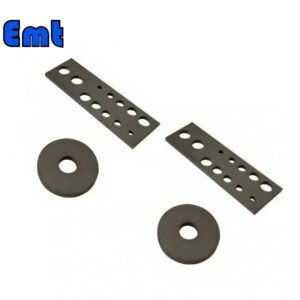
Carbon steel corrosion coupons play a crucial role in various industries by helping to monitor and manage corrosion. They significantly reduce costs by detecting and mitigating corrosion early. This practice extends the life of critical infrastructure, minimizing premature replacements. Furthermore, corrosion coupons prevent equipment failures, ensuring safety and reliability. They also help industries comply with stringent safety regulations, maintaining safe operations.
Moreover, they protect the environment by preventing leaks and contamination. Regular monitoring of coupons optimizes processes by identifying and addressing issues promptly. This enhances product quality by keeping the production environment uncontaminated. Corrosion data supports predictive maintenance, allowing for planned shutdowns. It also aids informed decision-making regarding materials and protective measures. These coupons are versatile, used in various environments, and customizable for specific conditions. They offer a cost-effective monitoring solution compared to other techniques. Their simplicity allows easy deployment and analysis without complex equipment. Therefore, corrosion coupons are invaluable for maintaining industrial integrity and efficiency.

Understanding Corrosion
Understanding corrosion mechanisms is critical for the preservation of infrastructure and machinery integrity. Corrosion is the degradation of materials, usually metals, due to chemical reactions with their environment. It primarily involves the oxidation of metals, leading to material degradation, which is often accelerated by moisture, oxygen, and pollutants.
Corrosion can be grouped based on its unique traits, such as uniform, localized pitting, and galvanic types. Uniform corrosion impacts the overall surface of the material, causing consistent and uniform material loss. Conversely, pitting corrosion forms small and localized holes or pits which could ultimately result in severe damage. Galvanic corrosion is caused when two distinct metals come into contact in an electrolyte, leading to the accelerated corrosion of one of the metals. Crevice corrosion happens in confined spaces, where stagnant solutions promote localized attack. Lastly, stress corrosion cracking involves the combination of tensile stress and corrosive environments, leading to cracks.
Understanding these types of corrosion is essential for selecting appropriate prevention and mitigation strategies. This knowledge can help in the development of effective protective measures, such as coatings, cathodic protection, and other techniques.
In summary, corrosion is a complex process that can have significant consequences for infrastructure and machinery. Understanding the mechanisms and types of corrosion is crucial for the preservation of these assets.
Factors Influencing Corrosion
Environmental conditions significantly influence corrosion rates in materials. High temperatures often accelerate chemical reactions, increasing corrosion. Humidity levels play a crucial role, as moisture facilitates electrochemical reactions. Also, low pH levels indicate acidic conditions, which can enhance the corrosivity of the environment. Therefore, monitoring these environmental factors is essential for corrosion control.
Material properties also affect corrosion susceptibility. The composition of the material determines its resistance to specific corrosive agents. For instance, alloys with chromium resist oxidation better than pure metals. Additionally, the surface finish impacts corrosion; smoother surfaces tend to have lower corrosion rates. Thus, selecting materials with appropriate properties is vital for durability.
Operational factors further influence corrosion in industrial settings. High flow rates can cause erosion-corrosion by removing protective layers. Conversely, low flow rates may allow corrosive agents to stagnate, increasing localized attack. Pressure changes can also impact corrosion, especially in systems with varying operational conditions. Consequently, understanding and managing these factors help mitigate corrosion risks.
Types of Corrosion Coupons
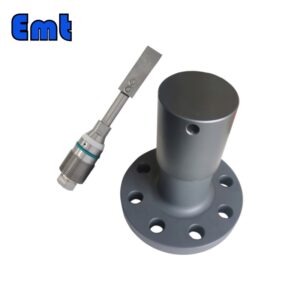
Carbon steel is a popular and economical choice for corrosion coupons compared to stainless steel and alloys. This is due to its wide application in industry, making it suitable for a variety of industrial environments. Carbon steel provides reliable data relevant to a wide range of applications, serving as an efficiency-enhancing solution for many businesses. Unlike stainless steel, it corrodes predictably, allowing for accurate monitoring. Moreover, it is easier to source and fabricate, reducing costs further. While alloys offer higher resistance, they may not reflect typical corrosion rates. Therefore, industries often prefer carbon steel for its practicality and relevance in corrosion monitoring.
Coupon Shapes and Sizes
Standard dimensions for corrosion coupons ensure consistency and comparability in data collection. Typically, coupons measure 2 inches by 0.5 inches. This size provides a manageable surface area for corrosion assessment. Additionally, the thickness usually ranges from 0.05 to 0.1 inches. These dimensions balance ease of handling with sufficient material for accurate readings. Standard sizes also facilitate deployment in various industrial settings. Furthermore, uniform dimensions streamline the manufacturing process, reducing costs. Therefore, using standard dimensions enhances the efficiency and reliability of corrosion monitoring.

Reviews
There are no reviews yet.