

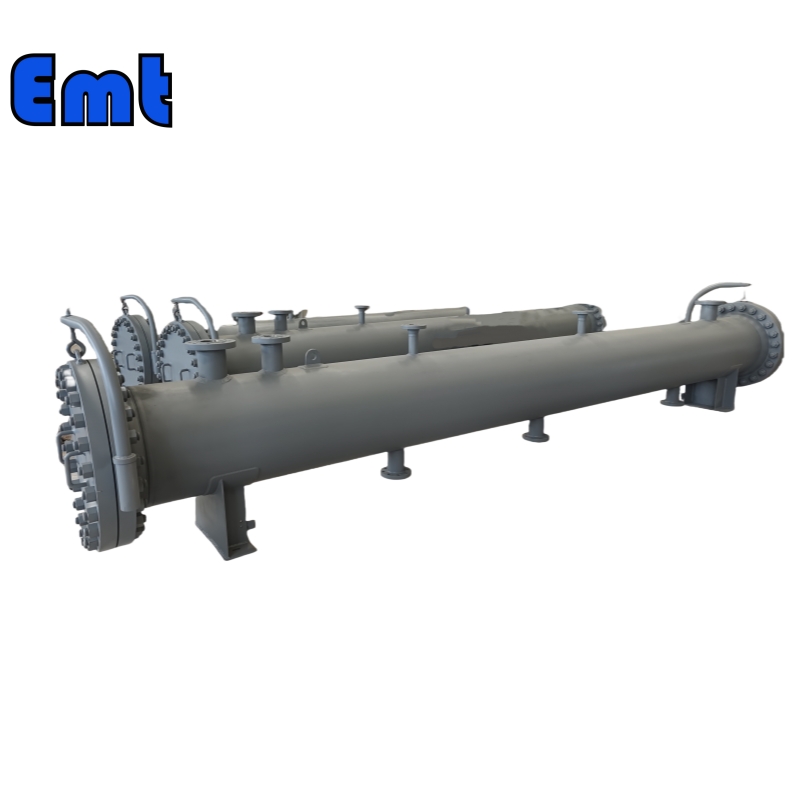
Description
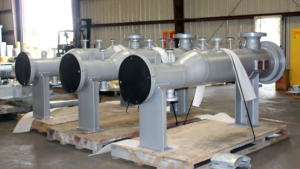
Introduction to Pig Launcher and Receiver
Pig Launcher and Receiver is an integral component of pipeline maintenance equipment primarily used in the oil and gas industry. These devices facilitate inserting and retrieving a “pig,” a tool that operators send through a pipeline. Pigs serve various functions such as cleaning, inspection, and separation of different batches of fluids within the same pipeline.
Pig Launcher
The Pig Launcher is a device that introduces the pig into the pipeline. It is typically installed at the start of the pipeline or at specific points where the pig needs to be sent through. The launcher is a complex assembly consisting of a chamber that holds the pig. When launching the pig, operators place it into the launcher which is then sealed off by a closure. The pressure within the pipeline is adjusted to push the pig into the pipeline.
Pig Receiver
The Pig Receiver is located at the opposite end of the pipeline or at a designated point where the pig exits. It serves the purpose of safely removing the pig from the pipeline after it has traveled through it. Similar to the launcher, it consists of a chamber that can be opened to retrieve the pig. It also includes mechanisms to safely depressurize the system and remove the pig without disrupting the pipeline operation.
Advantages of Pig Launcher and Receiver
Pigging enhances the efficiency of pipeline operations by keeping the pipes clean and free from obstructions that could impair flow rate and quality. Regular maintenance with pigs helps prevent costly repairs and downtime by detecting and addressing issues before they escalate. Additionally, pigs maintain pipeline integrity, reducing the risk of leaks or bursts that could pose environmental or safety hazards. Overall, Pig Launchers and Receivers are crucial for maintaining the health, efficiency, and safety of pipeline systems, particularly in industries that depend heavily on the long-distance movement of fluids.
Pig Receiver Operation Preparation
Empty the dirty oil tank and check all valve statuses. Open the safety valve.
Ensure the quick-opening closure seals well.
Prepare rags and a dirty oil drum. Lay plastic under the receiver for collected impurities.
Open the bypass valve of the receiver outlet ball valve (start with the low-pressure side, then the high-pressure side) to let in oil. Open the top vent valve to release gas. Watch the dirty oil tank level; close the vent when it noticeably rises. Wait 1-2 minutes, vent again, and then close the vent valve. Close the bypass valve of the receiver outlet ball valve.
Proceed with the pig receiver operation.
Pig Receiver Operation Control
Open the receiver outlet ball valve; after it’s fully open, open the receiver inlet ball valve.
Once the receiver inlet ball valve is fully open, close the incoming station ball valve (these valves are interlocked). This switches the process to the pig receiving mode. Wait for the pig to arrive.
When the pig indicator alarm signals, the pig has arrived. Open the outlet ball valve; after it’s fully open, close both the launcher inlet and outlet ball valves (these valves are interlocked). Switch back to the normal flow process.
Drain the oil inside the receiver and perform a nitrogen purge. Empty the dirty oil tank.
Open the quick-opening closure of the receiver, remove the pig, and clean out the impurities.
Close the quick-opening closure of the receiver as required. Finish the pig operation.

Confirmation of Pig Sending and Receiving
When sending or receiving a pig, it passes a pipeline equipped with a pig indicator, triggering a signal alarm. The onsite marker flips vertically downwards. A remote device also sends a passage signal, visible in the control room and the Chengdu control center, confirming the pig’s dispatch or arrival.
Place an electronic tracking transmitter inside the pig and a receiver beside the entry and exit pipelines. When the pig passes, the receiver sounds an alarm, indicating the pig’s dispatch or arrival.
Due to the slightly oversized fit of the pig in the pipeline, it rubs against the pipe wall as it moves with the oil flow, making a loud noise and causing vibrations. These sounds and vibrations can confirm the pig’s dispatch or arrival.
Applications of Pig Launcher and Receiver
Pig Launchers and Receivers have several applications in pipeline maintenance. Operators use pigs to clean pipelines by scraping and brushing away residue, scale, and other deposits that accumulate inside the pipe, which helps maintain flow efficiency and prevent blockages. Inspection pigs, equipped with various sensors, assess the condition of the pipeline and detect issues such as corrosion, cracks, or other structural faults. In pipelines where operators transport different products sequentially, pigs act as separators to prevent mixing, which is crucial for maintaining the purity of the transported substances. Additionally, pigging systems can send specific volumes or batches of product through a pipeline, ensuring precise delivery quantities.
Reviews
There are no reviews yet.